 (208) 991-3502
 Meridian, ID






 January 10, 2026
Security cameras only work when they’re placed correctly. This guide explains where cameras should be installed on construction sites to maximize deterrence, visibility, and real protection.
Installing security cameras on a construction site isn’t just about putting cameras “up somewhere.” Camera placement is the single biggest factor that determines whether a jobsite security system actually works—or simply creates a false sense of protection.
For builders and contractors in the Treasure Valley, jobsites change constantly. Materials arrive early. Crews rotate. Access points shift. A camera placed without intention can easily miss the very activity it was meant to capture.
This guide walks through how professional jobsite camera placement works, which areas matter most, and how to avoid the mistakes that cause systems to fail.
Start by Thinking Like Someone Who Shouldn’t Be There
The most effective camera placement begins with mindset, not equipment.
People who steal from jobsites aren’t looking to be caught. They look for convenience: easy access, poor lighting, and blind spots. Cameras should be placed to interrupt that convenience.
Instead of asking, “Where can I mount a camera?” the better question is:
“Where would someone enter, linger, or load materials without being seen?”
Those areas are where cameras belong.
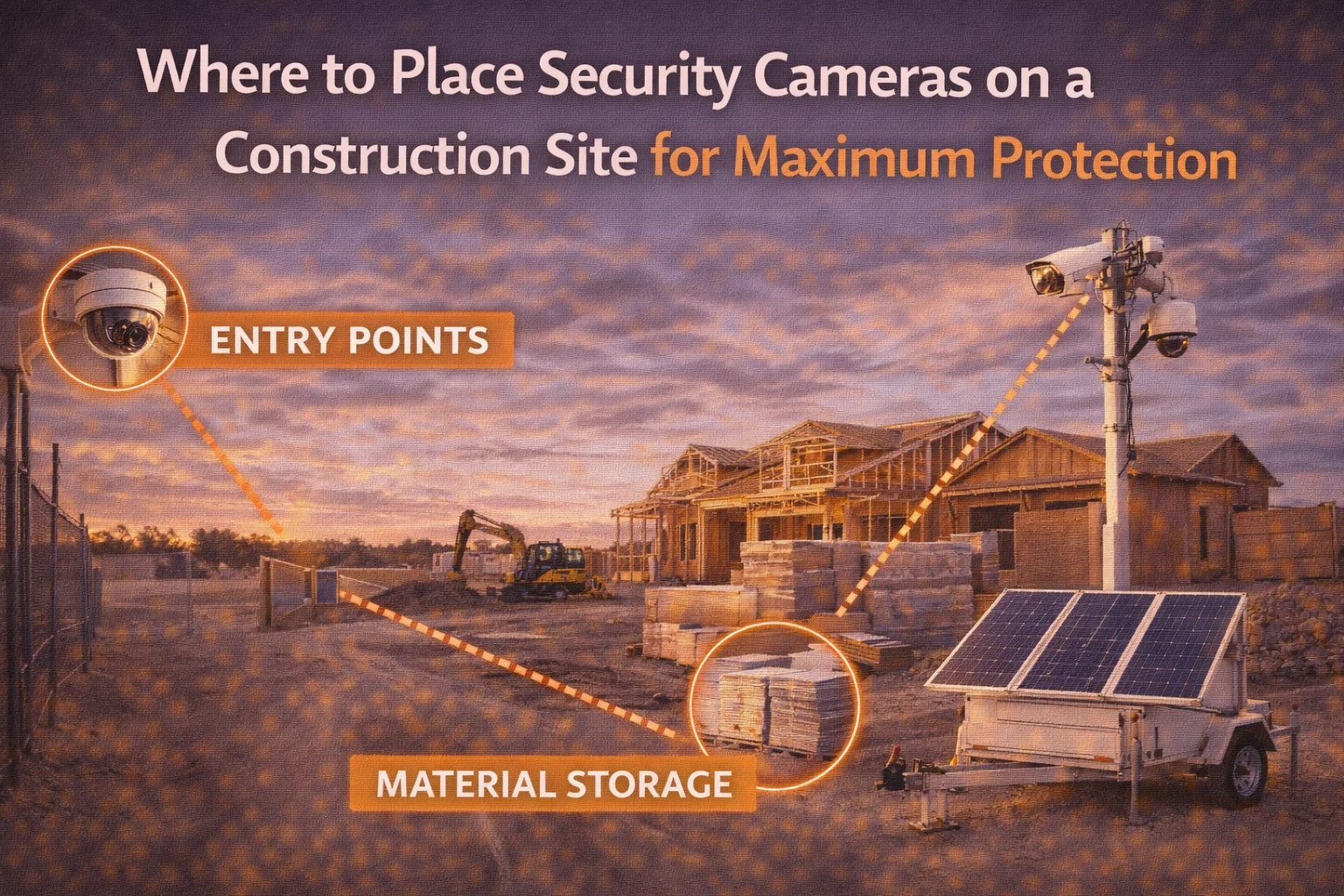
Entry Points Are Always the First Priority
Every construction site has predictable access points, even when layouts change.
These typically include:
Vehicle entrances and gates
Temporary fencing openings
Main walk-in access paths
Cameras covering these areas serve two purposes at once. They document who enters the site and, just as importantly, they make it obvious that access is being monitored.
A camera placed at an entry point doesn’t need to capture the entire site. It needs to clearly capture who comes and goes. That clarity matters far more than wide, unfocused views.
Material Storage Areas Deserve Dedicated Coverage
One of the most common mistakes on construction sites is assuming that perimeter cameras will also cover stored materials. In reality, they rarely do.
High-value materials are often staged in predictable locations: framing lumber, copper wiring, fixtures, HVAC equipment, or tools waiting to be installed. These areas should be treated as targets, not afterthoughts.
Cameras aimed at material storage zones should be placed to capture activity around the materials—not just general movement nearby. This distinction matters when footage is reviewed or incidents are investigated.
Builders often underestimate how quickly materials can disappear when these zones aren’t directly monitored.
Equipment Zones and Heavy Machinery Areas
Large equipment is harder to steal, but it’s still frequently damaged, tampered with, or used without authorization.
Cameras covering equipment areas provide:
Awareness of after-hours activity
Documentation if damage occurs
Deterrence against unauthorized use
Placement here should prioritize clear angles, not height alone. Cameras mounted too high often lose detail, while cameras placed too low may be vulnerable to tampering.
Professional planning balances visibility, protection, and image quality.
Lighting and Cameras Must Be Planned Together
Cameras do not perform well in darkness, no matter how advanced they are.
One of the most overlooked aspects of jobsite camera placement is lighting. Cameras placed in poorly lit areas often produce footage that looks acceptable on a spec sheet but useless in practice.
Effective jobsite security treats lighting and cameras as a pair. Well-lit areas improve:
Image clarity
Face and vehicle identification
Overall deterrence
This is especially important during winter months in Idaho, when darkness arrives early and jobsites sit unattended for long stretches.
Avoid the “Too High, Too Wide” Mistake
Many jobsite cameras fail because they’re mounted too high and aimed too broadly.
While it may feel safer to “see everything,” wide views often sacrifice detail. Faces become unrecognizable. Activity becomes ambiguous. Important moments get lost in the frame.
Cameras should be placed with intentional framing, focused on:
Paths of movement
Interaction zones
Points where people stop, load, or access materials
Clear, usable footage always beats wide, unfocused coverage.
Plan for Change, Not Perfection
Construction sites evolve. Walls go up. Storage moves. Access shifts.
The best camera placement strategies account for this reality. Temporary and semi-mobile camera systems allow coverage to adapt as the site changes. Cameras that can be repositioned throughout the project lifecycle provide far more value than fixed placements that become obsolete halfway through the build.
This adaptability is why many builders plan camera placement as part of broader jobsite strategies similar to those discussed at
👉 https://treasurevalleysolutions.com/services/
Why Professional Placement Makes the Difference
Camera placement is not guesswork—it’s experience.
Professionals understand:
How theft actually occurs on jobsites
Where blind spots naturally form
How lighting affects footage
How to adjust coverage as sites evolve
Poor placement doesn’t just reduce effectiveness—it wastes investment. Well-placed cameras, even in smaller numbers, consistently outperform larger systems installed without strategy.
Frequently Asked Questions
How many cameras does a typical construction site need?
There’s no fixed number. Placement matters more than quantity.
Should cameras be visible or hidden?
Visible cameras provide stronger deterrence on jobsites.
Can cameras be moved during construction?
Yes. Temporary and trailer-based systems are designed for this.
Do cameras need to cover the entire site?
No. They should focus on access points, materials, and activity zones.
Is professional planning really necessary?
Yes. Most jobsite camera failures are due to poor placement, not bad equipment.
Smart Placement Turns Cameras Into Real Security
Security cameras don’t protect jobsites simply by being present. They protect sites when they’re placed with intention—covering the right areas, supported by lighting, and adapted as projects evolve.
For Treasure Valley builders and contractors, thoughtful camera placement reduces losses, improves accountability, and keeps projects moving forward without disruption.
When cameras are placed correctly, they stop being passive observers and start becoming a real security tool—and that’s the difference that matters.